
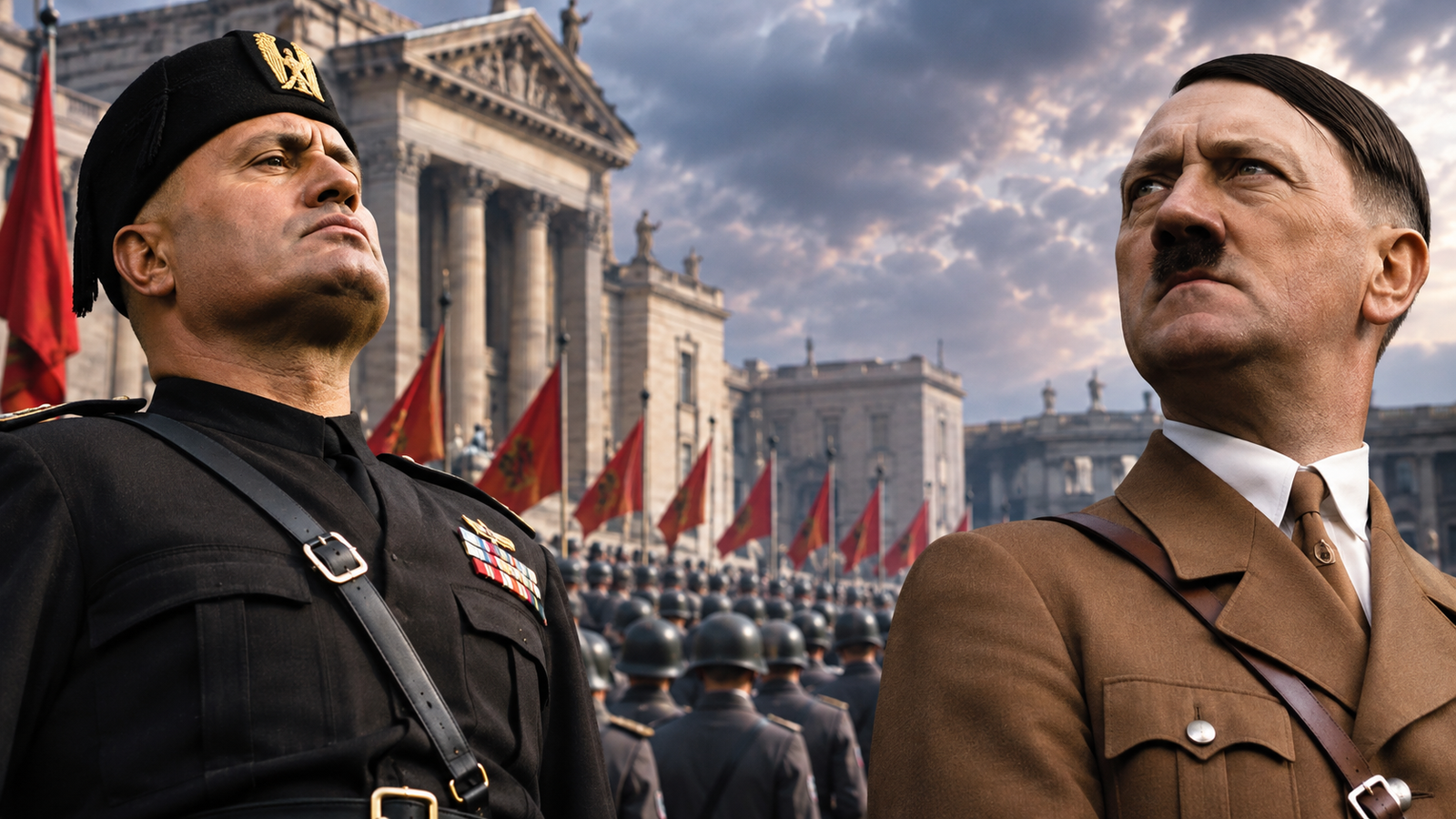
The term fascisterne is closely connected to one of the most influential and controversial political movements of the twentieth century: fascism. Originating from the Danish language, fascisterne translates to “the fascists” in English. It refers to individuals or groups associated with fascist ideology, which historically emphasized authoritarian leadership, extreme nationalism, political control, and opposition to liberal democracy.
Understanding fascisterne requires examining the historical circumstances that allowed fascist movements to emerge, particularly in Europe during the period between the two World Wars. From Benito Mussolini’s rise in Italy to the expansion of fascist movements across European countries, this political ideology profoundly affected governments, societies, and international relations. This article explores the meaning of fascisterne, its historical development, defining characteristics, political influence, and continuing relevance in modern discussions about democracy and authoritarianism.
What Does Fascisterne Mean?
The word fascisterne is a Danish political and historical term that means “the fascists.” It is the definite plural form of fascist, referring to people who support or belong to fascist political movements.
In Danish, the word may appear in historical accounts, political discussions, educational materials, and analyses of extremist ideologies. Its meaning depends on the context, but it generally identifies supporters of fascism rather than describing a separate political philosophy.
Linguistic Origins of Fascisterne
The term is connected to the Italian word fascismo, which developed from fascio, meaning a bundle or association. The related Latin word fasces referred to a bundle of rods, sometimes surrounding an axe, that symbolized authority in ancient Rome.
Benito Mussolini’s political movement adopted this symbolism to represent unity, strength, and state authority. As fascism spread internationally, related terms entered European languages, including Danish.
Although fascisterne is a Danish expression, its historical significance extends far beyond Denmark because it refers to a political movement that influenced numerous countries.
Fascisterne in Historical and Political Contexts
In historical writing, fascisterne may refer to members of Mussolini’s Fascist Party, supporters of other fascist organizations, or individuals associated with comparable authoritarian nationalist movements.
However, historians distinguish between fascism as a specific political ideology and authoritarianism as a broader category. Not every dictatorship or nationalist movement is necessarily fascist.
This distinction is important because the term carries a particular historical meaning and should not automatically be applied to every government that exercises strong political control.
The Historical Origins of Fascisterne
The emergence of fascisterne was closely associated with the political instability, economic difficulties, and social tensions that followed World War I.
European societies experienced enormous disruption during the early twentieth century. Military losses, inflation, unemployment, and dissatisfaction with established political institutions created conditions in which radical political movements could attract supporters.
The Rise of Fascism in Italy
Italy became the birthplace of organized fascism under Benito Mussolini.
In 1919, Mussolini established the Fasci Italiani di Combattimento, a political movement that combined militant nationalism, hostility toward socialism, and opposition to parliamentary liberalism.
The movement developed into the National Fascist Party in 1921. Fascist squads, commonly known as Blackshirts, used intimidation and violence against political opponents, particularly socialists and trade union activists.
Following the March on Rome in October 1922, King Victor Emmanuel III appointed Mussolini prime minister. Mussolini subsequently dismantled democratic institutions and consolidated dictatorial power.
Why Fascist Movements Gained Support
Several historical conditions contributed to the growth of fascism.
Economic uncertainty made promises of national recovery attractive to some citizens. Political polarization weakened confidence in parliamentary government, while fears of communist revolution encouraged sections of the business community, military establishment, and conservative political leadership to support fascist organizations.
Fascist leaders also presented themselves as figures capable of restoring national pride and public order.
However, these promises were accompanied by the suppression of political opposition, restrictions on civil liberties, and the increasing concentration of power in the state.
The Core Ideology and Characteristics of Fascisterne
Fascisterne supported political movements that placed national unity, authoritarian authority, and collective identity above individual political freedoms.
Although fascist movements differed across countries, historians identify several recurring ideological characteristics.
Extreme Nationalism and National Unity
Nationalism occupied a central position in fascist ideology.
Fascist movements portrayed the nation as a unified political and cultural community whose interests should override competing political, social, and individual concerns.
This approach often involved defining certain populations as outsiders or enemies of the nation. Depending on the movement, exclusion could be based on ethnicity, political beliefs, religion, or other identities.
Fascist nationalism also frequently included ideas of national rebirth, territorial expansion, and the restoration of perceived historical greatness.
Authoritarian Leadership
Fascist political systems concentrated authority around powerful leaders who claimed to embody the will of the nation.
Democratic competition, independent institutions, and political pluralism were treated as obstacles to national unity.
Under Mussolini, political power increasingly centered on the dictator, while opposition parties and independent organizations faced systematic repression.
Militarism and Political Violence
Militarism was another defining feature of historical fascist movements.
Military discipline, sacrifice, and physical strength were celebrated as national virtues. Fascist organizations frequently used uniforms, marches, rallies, and paramilitary groups to demonstrate collective power.
Political violence was not simply an accidental feature of fascism. It played an important role in intimidating opponents, weakening democratic institutions, and establishing authoritarian control.
Fascisterne and the Spread of Fascism Across Europe
Although fascism first developed into a governing system in Italy, related movements appeared across Europe during the interwar period.
These organizations shared certain ideological themes, but their political programs and historical circumstances were not identical.
Fascism in Germany
Germany’s National Socialist movement, led by Adolf Hitler, developed a dictatorship with important similarities to Italian fascism.
Both movements rejected liberal democracy, promoted authoritarian leadership, used political violence, and sought to transform society through extreme nationalism.
However, Nazism placed a particularly central emphasis on racial hierarchy, antisemitism, and the pursuit of a racially defined national community.
After Hitler became chancellor in January 1933, the Nazi regime rapidly destroyed democratic institutions and established a totalitarian dictatorship.
Its policies led to aggressive territorial expansion, World War II, and the Holocaust, in which approximately six million European Jews were murdered alongside the persecution and mass killing of other targeted populations.
Fascist Movements in Other European Countries
Fascist and fascist-inspired organizations also emerged in countries such as Britain, Romania, Hungary, and Spain.
The British Union of Fascists, led by Oswald Mosley, attempted to establish a mass fascist political movement in the United Kingdom but never gained national governing power.
Romania’s Iron Guard combined ultranationalism, political violence, and religious elements in its ideological program.
Spain under Francisco Franco developed an authoritarian dictatorship with important connections to fascist organizations, particularly the Falange. Nevertheless, historians debate how far Franco’s regime should be classified as fascist throughout its existence.
These examples demonstrate why fascisterne should be understood within specific national and historical contexts rather than treated as a completely uniform movement.
Fascisterne in Denmark and Scandinavian History
The Danish meaning of fascisterne makes Denmark’s own historical experience particularly relevant.
During the 1930s, Denmark, like other European countries, experienced the political influence of extremist ideologies emerging elsewhere on the continent.
However, Danish fascist and Nazi movements did not achieve the same political dominance as their counterparts in Italy and Germany.
Political Extremism in Denmark
The Danish National Socialist Workers’ Party, known as DNSAP, was founded in 1930 and modeled itself partly on Germany’s Nazi movement.
The party promoted National Socialist ideas but remained a relatively small force within Danish electoral politics.
Its limited electoral success reflected, among other factors, the continued strength of Denmark’s established political institutions and parliamentary traditions.
Although the DNSAP was a Nazi organization rather than simply a generic fascist party, it is relevant to discussions of fascisterne because Nazism belongs to the broader historical family of fascist movements.
Denmark During World War II
Germany occupied Denmark on April 9, 1940.
The occupation created difficult political circumstances involving cooperation, resistance, and attempts to preserve Danish institutions under German control.
Some Danish individuals collaborated with Nazi authorities, while others participated in resistance activities.
In October 1943, Danish resistance networks and ordinary citizens helped thousands of Danish Jews escape to neutral Sweden, preventing the deportation of much of Denmark’s Jewish population.
This period remains an important subject in Danish historical education and public memory, particularly when examining fascism, occupation, collaboration, and resistance.
Fascisterne Compared With Other Political Ideologies
Fascism is sometimes confused with conservatism, communism, or authoritarianism. Although these ideologies and political systems may share particular features, they have different historical foundations and political objectives.
The following table highlights important distinctions.
| Political ideology | Central emphasis | Political structure | Relationship with democracy |
|---|---|---|---|
| Fascism | Ultranationalism, national rebirth, authoritarian unity | Dictatorial, typically one-party | Fundamentally opposed to liberal democracy |
| Liberal democracy | Individual rights, political equality, constitutional government | Competitive multiparty institutions | Based on democratic participation |
| Conservatism | Tradition, continuity, established institutions | Varies by movement and country | Often compatible with constitutional democracy |
| Communism | Class relations, collective ownership, abolition of capitalism | Varies by tradition; historical one-party states were authoritarian | Interpretations differ; many historical communist regimes suppressed pluralism |
| Authoritarianism | Concentration of political power and limited opposition | Centralized or restricted political rule | Limits or rejects meaningful democratic competition |
Why Fascism Is Different From Ordinary Nationalism
Nationalism alone does not necessarily constitute fascism.
A democratic political movement may emphasize national independence, cultural heritage, or national identity while respecting constitutional institutions and political freedoms.
Fascism goes further by demanding a radical transformation of society around an authoritarian vision of national unity, frequently involving exclusion, militarism, and political repression.
Fascism and Authoritarianism Are Not Identical
Authoritarianism describes political systems in which power is concentrated and political competition is restricted.
Fascism is a more specific ideological phenomenon involving extreme nationalism, mass political mobilization, a mythology of national renewal, and hostility toward liberal democratic values.
Consequently, all established fascist dictatorships are authoritarian, but not every authoritarian government is fascist.
The Role of Propaganda and Media Under Fascisterne
Propaganda played a significant role in the expansion and maintenance of fascist political power.
Fascist governments understood that controlling public information could influence political attitudes, encourage loyalty, and weaken opposition. Newspapers, radio broadcasts, films, public speeches, and educational institutions became important instruments of ideological communication.
Media Control and Political Messaging
Under fascist rule, independent journalism faced censorship, intimidation, and government interference.
Political authorities promoted messages emphasizing national strength, loyalty to leadership, and the supposed dangers posed by political enemies.
Mussolini’s government developed extensive propaganda operations, while Nazi Germany established an even more comprehensive system of ideological communication under Joseph Goebbels.
These systems aimed to shape public perceptions and normalize authoritarian political authority.
Education and Youth Organizations
Fascist movements also sought to influence younger generations.
Schools and youth organizations promoted obedience, physical discipline, nationalism, and loyalty to the state.
In Fascist Italy, youth organizations helped communicate the regime’s political values, while Nazi Germany developed the Hitler Youth and the League of German Girls.
Such organizations were intended to establish ideological loyalty from an early age and reduce the influence of competing political and social institutions.
The Impact of Fascisterne on Society and Human Rights
The consequences of fascist government extended beyond political institutions.
Fascisterne and the regimes they supported contributed to the erosion of civil liberties, the persecution of political opponents, and the expansion of discriminatory state policies.
Suppression of Political Opposition
Fascist governments restricted freedom of expression, prohibited or weakened opposition parties, and limited independent political organization.
Trade unions, opposition newspapers, and civil society organizations frequently became targets of state repression.
In Italy, Mussolini’s government progressively eliminated meaningful political competition and established a dictatorship.
In Nazi Germany, repression developed into a vast system of imprisonment, persecution, forced labor, and mass murder.
Discrimination and Persecution
Fascist political systems frequently promoted exclusionary definitions of national belonging.
Nazi Germany implemented systematic racial persecution, including antisemitic legislation, forced displacement, and genocide.
Italian Fascism also adopted increasingly discriminatory policies, including antisemitic racial laws introduced in 1938, and committed serious atrocities during its colonial campaigns.
These historical examples demonstrate how authoritarian nationalism, when combined with institutionalized discrimination and unchecked political power, can produce devastating consequences for human rights.
The United States Holocaust Memorial Museum identifies ultranationalism, authoritarianism, political violence, and rejection of democratic government as central characteristics of fascism.
Fascisterne in Modern Political Discussions
Although the major European fascist regimes were defeated during World War II, fascism remains an important subject in contemporary political analysis.
The word fascisterne may appear in modern Danish discussions about extremist movements, authoritarian politics, and historical memory.
However, its contemporary use requires careful interpretation.
Neo-Fascism and Contemporary Extremism
Neo-fascism refers to political movements that revive, reinterpret, or draw inspiration from historical fascist ideas.
Such movements may emphasize extreme nationalism, hostility toward pluralism, exclusionary national identity, or authoritarian political leadership.
Nevertheless, not every radical nationalist organization can automatically be classified as neo-fascist. Researchers examine ideological commitments, organizational practices, historical connections, and attitudes toward political violence before applying the term.
This approach helps distinguish genuine ideological continuity from superficial similarities.
Why Accurate Political Terminology Matters
In public debate, the word fascist is sometimes used as a general insult against political opponents.
While such usage may communicate strong criticism, it can also obscure the historical meaning of fascism.
Accurate terminology requires examining whether a movement advocates authoritarian national transformation, rejects democratic pluralism, legitimizes political violence, or draws directly from fascist traditions.
The Danish dictionary Den Danske Ordbog recognizes both the historical meaning of fascist and broader figurative usage involving extreme nationalism or authoritarian repression.
Understanding these distinctions encourages more precise political discussion and reduces the risk of misleading historical comparisons.
Frequently Asked Questions About Fascisterne
1. What does fascisterne mean in English?
Fascisterne is a Danish word meaning “the fascists.” It refers to people associated with fascism, an authoritarian and ultranationalist political ideology that became particularly influential in Europe during the early twentieth century.
2. Who were the fascisterne in history?
Historically, fascisterne included supporters and members of fascist political movements, particularly those associated with Benito Mussolini’s Italy. The term can also be applied to members of other historically recognized fascist movements, depending on the context.
3. What is the difference between fascism and Nazism?
Fascism is a broader authoritarian ultranationalist ideology, while Nazism was a specific German movement associated with Adolf Hitler. Nazism shared central fascist characteristics but placed especially strong emphasis on biological racism, antisemitism, and racial hierarchy.
4. Did fascisterne exist in Denmark?
Yes. Denmark had organizations influenced by fascist and Nazi ideologies during the twentieth century. The Danish National Socialist Workers’ Party was one example, although it never established national governing power comparable to the regimes in Italy or Germany.
5. Is fascism still relevant today?
Yes. Fascism remains relevant to historical research, political education, and discussions about authoritarianism and extremist movements. Studying fascisterne helps explain how democratic institutions can weaken under political polarization, organized violence, propaganda, and attacks on civil liberties.
Conclusion
Fascisterne is more than a Danish historical expression; it is a term connected to the development of fascist movements and their profound influence on twentieth-century politics. From Mussolini’s rise in Italy to the spread of authoritarian ultranationalist movements across Europe, fascism reshaped political institutions and contributed to repression, persecution, and international conflict. Understanding its defining characteristics, historical origins, and differences from other political ideologies provides essential context for interpreting European history and the consequences of extremist political movements.
The study of fascisterne also remains valuable in contemporary society because it highlights the importance of democratic accountability, independent institutions, civil liberties, and historically accurate political language. By examining the circumstances that enabled fascist movements to gain influence, readers can better understand the dangers associated with political violence, exclusionary nationalism, and concentrated authority. A careful understanding of fascism supports more informed historical interpretation and meaningful discussion about the protection of democratic values.