
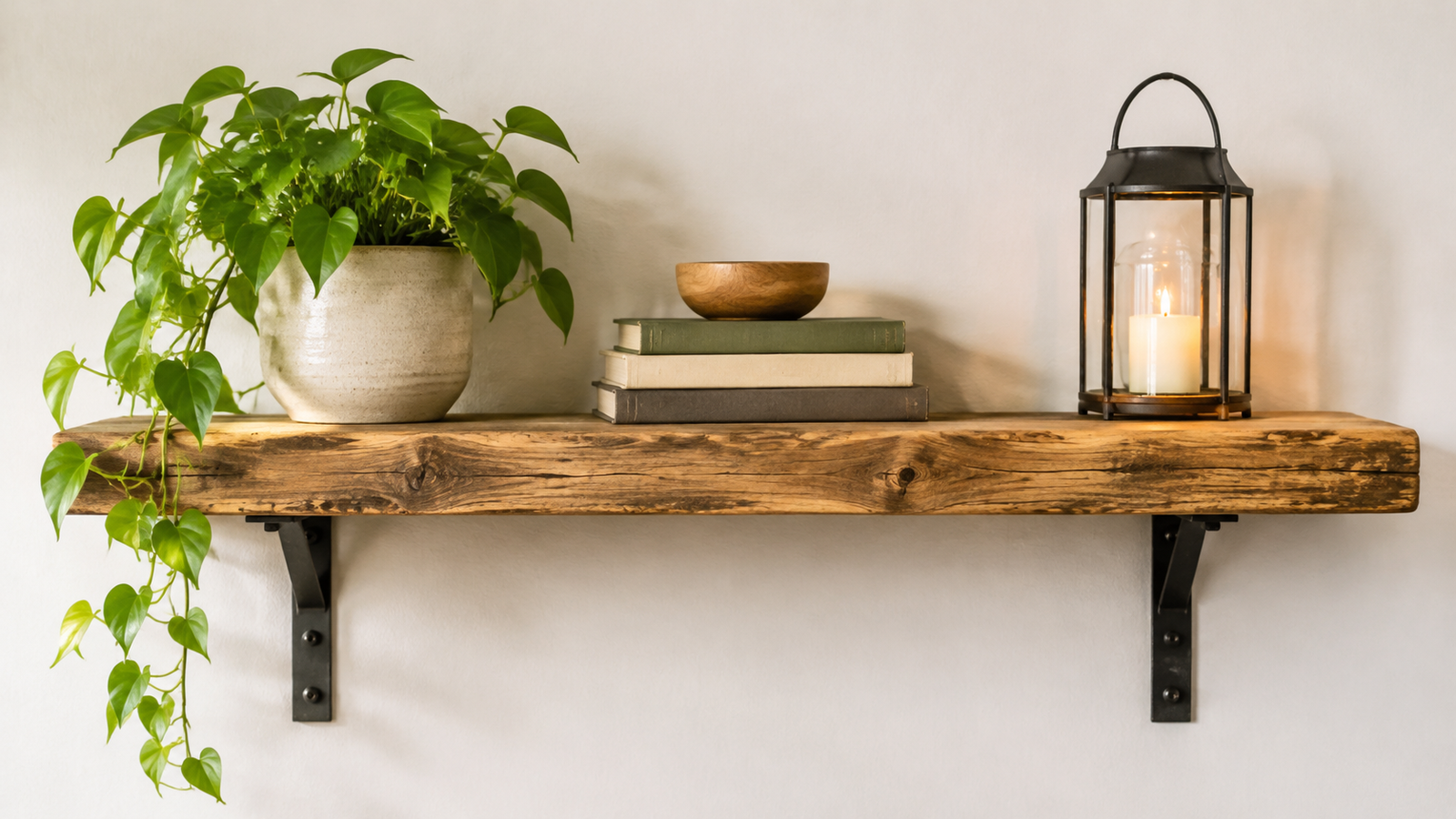
As interest in sustainable furniture and personalized home decoration continues, trallehylde shelving offers an alternative to conventional manufactured shelves. Whether used for displaying decorative objects, organizing everyday essentials, or creating a rustic focal point, it can bring warmth and functionality to different spaces. Understanding its materials, construction, installation requirements, and maintenance needs can help buyers and DIY enthusiasts choose a shelf that suits their interior.
What Is a Trallehylde?
The word trallehylde comes from Danish, combining tralle, meaning trolley or cart, and hylde, meaning shelf. In furniture and interior design, the term generally describes a shelf made from, or styled after, wooden trolley boards. The precise construction can vary depending on the manufacturer, the original material, and whether the product uses reclaimed or newly produced timber.
Traditional trolley boards were designed for practical industrial purposes, where strength and durability were important. When these materials are repurposed for interior furniture, their weathered surfaces, visible grain, and natural imperfections become attractive design characteristics.
Understanding the Scandinavian Connection
Scandinavian interior design frequently emphasizes functionality, natural materials, balanced proportions, and understated decoration. A trallehylde fits comfortably within this approach because it combines useful storage with the visual warmth of wood.
Unlike highly polished furniture, rustic wooden shelving often celebrates irregularities such as knots, color variations, and textured surfaces. These characteristics can make each reclaimed piece visually distinctive.
However, not every trallehylde is an authentic reclaimed industrial board. Some contemporary products are manufactured from new wood and designed to reproduce the appearance of traditional trolley timber.
Why Trallehylde Shelves Are Popular
The appeal of Trallehylde shelving lies in its versatility. It can serve as a practical storage solution while also contributing to the overall atmosphere of a room.
Its relatively simple construction allows it to complement industrial interiors, minimalist Scandinavian spaces, farmhouse-inspired homes, and contemporary environments. The use of natural timber also creates an appealing contrast with smooth walls, metal fixtures, glass, and modern furnishings.
History and Background of Trallehylde Shelving
The concept behind trallehylde furniture is connected to the broader tradition of reusing industrial materials for domestic purposes. Wooden transport equipment, pallets, carts, and workshop boards have long provided useful sources of timber for furniture construction.
As reclaimed-wood furniture gained attention, materials originally intended for demanding working environments began appearing in residential interiors. Boards with visible wear became valued not only for their potential durability but also for their history and distinctive appearance.
From Industrial Equipment to Home Furniture
Industrial trolley boards were traditionally selected for practical performance rather than decoration. Depending on their original purpose, they could be exposed to repeated handling, heavy loads, moisture, and surface abrasion.
When suitable boards are recovered, cleaned, inspected, and refinished, they can be transformed into shelves, tabletops, benches, or other furniture components.
This transformation illustrates how functional materials can acquire a new purpose without necessarily losing their original visual character.
The Influence of Reclaimed Wood Design
Reclaimed wood has become an established material choice in rustic and industrial interior design. Its popularity reflects interest in craftsmanship, material reuse, and furniture with an individual appearance.
A trallehylde made from reclaimed timber may display marks from previous use, while a newly manufactured version can offer a more consistent finish and predictable dimensions.
Neither option is automatically superior. The appropriate choice depends on the intended use, condition of the wood, design preferences, and installation requirements.
Key Features and Characteristics of a Trallehylde
A trallehylde can differ significantly from a conventional laminated shelf. Its most recognizable characteristics are usually associated with solid wood, visible texture, and a straightforward structural design.
Natural Wood Texture and Appearance
One of the defining features is the appearance of the timber. Depending on the wood species and finishing process, the surface may show pronounced grain patterns, knots, small cracks, or variations in color.
Reclaimed boards can also have marks from their previous use. These details contribute to a rustic appearance, although excessively damaged or unstable wood should not be used without proper assessment.
Some shelves are sanded to create a smoother surface, while others retain more of their original texture.
Solid and Practical Construction
Many trallehylde designs use relatively substantial wooden boards, which can provide a sturdy foundation when properly supported.
However, the thickness or appearance of a wooden shelf does not establish its safe load capacity. Structural performance also depends on the wood’s condition, shelf length, bracket design, wall material, and fastening method.
For heavy objects, appropriate support and reliable wall anchors are essential.
Flexible Finishing Options
A wooden trallehylde can be finished in several ways to suit different interior styles.
Clear finishes preserve much of the natural appearance, while wood oils may deepen the grain and create a warmer tone. Paints and stains allow greater color customization.
The correct finish depends on the wood species, intended location, and expected exposure to moisture or wear.
Different Types of Trallehylde Shelves
Although trallehylde is commonly associated with rustic wooden shelving, different configurations can serve different practical and decorative purposes.
Understanding these variations helps homeowners select a suitable design rather than choosing solely on appearance.
Wall-Mounted Trallehylde
A wall-mounted trallehylde uses brackets or another mounting system to support a wooden board.
This configuration is useful for living rooms, bedrooms, kitchens, and home offices because it provides storage without occupying floor space.
Visible metal brackets can reinforce an industrial aesthetic, while concealed supports may create a cleaner appearance. Concealed mounting systems require particular attention to installation specifications and load limits.
Floating Trallehylde
Floating shelves create the impression that the wooden board is attached directly to the wall without visible supports.
This style works well in minimalist interiors where visual simplicity is important.
However, heavy or thick wooden boards may require specialized concealed brackets, suitable wall construction, and careful installation. A floating design should never be selected without checking whether the mounting system can safely support the shelf and its contents.
Reclaimed Wooden Trallehylde
Reclaimed versions use timber recovered from previous applications.
These shelves may have a distinctive weathered appearance, making them attractive for industrial and farmhouse interiors.
Before installation, reclaimed wood should be checked for structural damage, pests, protruding fasteners, and possible contamination from previous industrial use.
Custom-Made Trallehylde
Custom shelving allows homeowners to select the dimensions, finish, support system, and overall appearance.
This option can be particularly useful for unusual wall spaces, alcoves, or rooms requiring coordinated furniture.
A custom shelf may also provide better control over wood preparation and hardware selection.
Common Uses of Trallehylde in Home Interiors
A trallehylde can serve different functions depending on its dimensions, location, and mounting system. Its adaptability makes it suitable for both decorative displays and practical organization.
Living Room Decoration
In living rooms, a trallehylde can display framed photographs, small plants, books, and decorative accessories.
The natural wood surface creates visual contrast against painted walls and contemporary furniture. It can also help connect other wooden elements within the room.
For a balanced appearance, homeowners can combine objects of different heights while leaving some open space on the shelf.
Kitchen Storage
A wooden shelf can provide accessible storage for mugs, jars, and frequently used kitchen items.
Rustic timber often works particularly well with neutral cabinets, ceramic accessories, and metal fixtures.
However, kitchens introduce additional considerations, including humidity, cooking grease, and repeated cleaning. The shelf should have an appropriate protective finish and should not be installed where excessive heat or moisture could damage the material.
Bedroom Organization
In bedrooms, trallehylde shelving can provide a place for books, decorative objects, and lightweight personal items.
It may be installed above a desk, beside a wardrobe, or on an otherwise unused wall.
Shelves placed near beds should be securely mounted, and heavy or breakable objects should not be positioned where they could fall onto someone.
Home Office and Workspace
A trallehylde can help organize notebooks, reference materials, and office accessories while maintaining a warm, natural appearance.
It can also be paired with a wooden desk or industrial-style metal furniture.
For larger collections of books or equipment, the shelf should be designed with suitable support to prevent excessive bending or mounting failure.
Commercial and Retail Interiors
Rustic wooden shelving can also complement cafés, boutiques, studios, and reception areas.
Its textured appearance can create a welcoming environment while providing space for decorative displays or merchandise.
In commercial settings, installation should account for frequent use, public safety, and any applicable building or accessibility requirements.
Trallehylde vs Traditional Shelves: Key Differences
Choosing between a trallehylde and a conventional shelf involves more than visual preference. Materials, maintenance, consistency, and installation requirements can influence the decision.
The following table compares typical characteristics, although individual products may differ.
| Feature | Trallehylde | Traditional Manufactured Shelf |
|---|---|---|
| Material | Often solid or reclaimed wood | Solid wood, MDF, particleboard, or other materials |
| Appearance | Rustic, textured, natural | Often smooth and uniform |
| Design style | Scandinavian, industrial, farmhouse | Modern, classic, minimalist, or decorative |
| Surface consistency | May show knots and irregularities | Often more consistent |
| Customization | Can often be cut, sanded, and refinished | Depends on construction and surface material |
| Maintenance | May require periodic wood care | Depends on material and finish |
| Sustainability | Reclaimed versions may support material reuse | Depends on sourcing and manufacturing |
| Installation | Requires supports suited to board weight | Depends on shelf design and manufacturer specifications |
Which Shelving Option Is Better?
A trallehylde may be preferable when natural materials, visible wood grain, and a rustic appearance are important design priorities.
Traditional manufactured shelving can be more suitable when consistent dimensions, lightweight construction, or a particular factory finish is required.
Neither type is inherently stronger or more sustainable. Those qualities depend on the specific materials, construction methods, product lifespan, and intended use.
Benefits of Choosing a Trallehylde
A well-made trallehylde offers several advantages, especially for homeowners interested in practical furniture with a distinctive appearance.
Distinctive Interior Character
Natural timber introduces texture and visual warmth that can soften the appearance of modern rooms.
Reclaimed boards may contain unique grain patterns and signs of previous use, giving them an individual appearance that can be difficult to reproduce with uniform manufactured materials.
Potential for Material Reuse
When made from suitable reclaimed wood, a trallehylde gives existing timber another useful application.
Reusing materials can reduce demand for newly produced components and help extend the useful life of wood that might otherwise be discarded.
However, the environmental benefit depends on factors such as transportation, processing, finishing products, and the condition of the recovered material.
Long-Term Practicality
Solid wood can be a practical material for shelving because it may be repaired, sanded, or refinished when necessary.
A properly constructed and installed shelf can remain useful for many years, although its lifespan depends on environmental conditions, maintenance, and the loads it supports.
Adaptability to Different Styles
A trallehylde does not need to be limited to rustic interiors.
Combined with black metal brackets, it can create an industrial appearance. Paired with light walls and understated accessories, it can complement Scandinavian minimalism.
Darker stains may suit traditional interiors, while a natural finish can work well in contemporary spaces.
How to Choose and Install the Right Trallehylde
Selecting a trallehylde requires attention to dimensions, timber quality, mounting hardware, and intended use.
A shelf that looks attractive may not be suitable for heavy storage or installation on every type of wall.
Choosing the Right Wood
Begin by examining the condition of the timber.
The board should be sufficiently sound for its intended purpose, without significant rot, severe splitting, or active insect damage. Reclaimed wood should also be assessed for old coatings, chemical residues, and embedded metal.
Different wood species have different characteristics, including density, hardness, grain, and moisture movement.
For indoor furniture, properly dried and prepared timber is generally preferable because excessive moisture can contribute to warping or dimensional changes.
Selecting the Correct Size
The ideal dimensions depend on the wall space and intended contents.
A narrow decorative shelf may require less depth than one intended for books or storage containers. Longer shelves may need additional supports to reduce deflection.
Measure the available space carefully and consider the distance from nearby doors, furniture, electrical fixtures, and walkways.
Installing a Trallehylde Safely
Installation should begin with identifying the wall construction. Masonry, concrete, timber studs, and plasterboard may require different fastening systems.
Brackets and anchors must be appropriate for the wall material and expected loads. Where necessary, use a stud finder or other suitable method to locate structural supports and check for hidden pipes or wiring before drilling.
The shelf should be level, securely attached, and tested cautiously before being loaded.
For heavy installations or uncertain wall conditions, professional assistance is advisable.
Choosing a Suitable Finish
The finish should match the shelf’s environment and expected use.
A shelf in a dry living room may need different protection from one installed in a kitchen or bathroom.
Follow the finish manufacturer’s instructions regarding surface preparation, application, curing, and cleaning. Products intended for food-contact surfaces should be selected appropriately if the shelf will directly contact food.
Maintenance, Cleaning, and Common Problems
Wooden shelving benefits from regular care, especially when it has a textured or unfinished surface.
Maintenance requirements depend on the timber, protective coating, environmental conditions, and frequency of use.
Cleaning and Everyday Care
Dust can usually be removed with a soft, dry cloth. For finished surfaces, a slightly damp cloth may be suitable if the coating manufacturer permits it.
Avoid leaving standing water on the wood, particularly around cracks, joints, and unfinished edges.
Strong cleaning chemicals or abrasive products may damage certain finishes and should not be used without checking compatibility.
Preventing Warping and Cracking
Wood naturally responds to changes in humidity and temperature.
Large fluctuations can contribute to swelling, shrinkage, movement, and surface cracking. Keeping indoor conditions reasonably stable can help reduce these effects.
Avoid placing untreated wood directly against persistent moisture sources or close to intense heat.
Checking Brackets and Fasteners
Over time, brackets and wall fixings should be inspected for movement, corrosion, or visible damage.
If the shelf begins to sag, tilt, or pull away from the wall, remove its contents and investigate the cause before continuing to use it.
Adding more objects to an already unstable shelf increases the risk of failure.
Common Limitations of Trallehylde Shelving
Despite its appeal, trallehylde shelving is not ideal for every application.
Reclaimed boards may require more preparation than new timber, and their irregular dimensions can complicate installation. Rough surfaces may also be unsuitable for delicate items unless carefully sanded and finished.
Additionally, solid wooden boards can be relatively heavy. This makes appropriate mounting hardware especially important.
Is Trallehylde a Sustainable and Worthwhile Choice?
A trallehylde can be a worthwhile furniture choice when its design, construction, and material quality match the intended application.
Its potential environmental advantages are particularly relevant when existing timber is reused rather than discarded.
Evaluating Sustainability
Reclaimed wood can help conserve usable materials, but it is important to distinguish genuinely recovered timber from newly manufactured wood with a distressed finish.
Buyers interested in environmental performance should ask about material origins, processing, and finishing methods.
For newly produced wooden shelves, responsibly managed forestry and credible sourcing information may also be relevant.
No single sustainability claim should be accepted solely because a product has a rustic or natural appearance.
Evaluating Product Quality and Credibility
When purchasing a trallehylde, examine the product description carefully.
A reliable seller should be able to provide useful information about dimensions, material type, surface treatment, mounting requirements, and any tested load rating.
Photographs can help assess appearance, but they cannot confirm structural integrity or the safety of a reclaimed board.
Where the wood’s origin or previous industrial use is uncertain, additional inspection may be necessary.
Is a Trallehylde Worth Buying?
For someone seeking natural texture, adaptable styling, and practical wall storage, a trallehylde can be an attractive option.
Its value depends on timber condition, craftsmanship, installation quality, and suitability for the room.
A well-prepared wooden shelf may provide lasting utility, but choosing it solely for its rustic appearance without considering safety and maintenance would be unwise.
Frequently Asked Questions About Trallehylde
1. What does trallehylde mean in English?
Trallehylde is a Danish compound word that can be understood as a trolley shelf. In furniture contexts, it commonly refers to rustic shelving made from or inspired by wooden trolley boards, often associated with Scandinavian and industrial interior design.
2. Is a trallehylde made from reclaimed wood?
Not always. Some trallehylde shelves are constructed from reclaimed industrial timber, while others use newly produced wood designed to achieve a similar rustic appearance. Buyers should confirm the material’s origin with the manufacturer or seller.
3. Can a trallehylde be used in a bathroom?
Yes, provided the wood and finish are suitable for humid environments and the shelf is installed securely. Bathrooms with persistent moisture may require additional surface protection and ventilation. Untreated or poorly maintained wood can be vulnerable to swelling and deterioration.
4. How much weight can a trallehylde hold?
There is no universal weight limit. Safe capacity depends on the wood’s dimensions and condition, bracket strength, fastening system, wall construction, and load distribution. Follow any tested manufacturer rating and avoid assuming that a thick wooden board can automatically support heavy objects.
5. Can I make a trallehylde myself?
Yes. A DIY trallehylde can be constructed from suitable wooden boards, appropriate brackets, and compatible wall fixings. The wood should be inspected, cleaned, prepared, and finished before installation. Safe mounting is particularly important when using heavy reclaimed timber.
Conclusion
A trallehylde brings together practical storage, natural materials, and the understated character associated with Scandinavian and industrial furniture design. Whether constructed from reclaimed trolley boards or newly prepared solid wood, it can add warmth and individuality to living rooms, kitchens, bedrooms, offices, and commercial spaces. Its appeal comes from the balance between useful functionality and a distinctive wooden appearance, allowing it to work with several interior styles without requiring elaborate decoration.
Choosing the right trallehylde involves more than selecting an attractive piece of timber. Material condition, shelf dimensions, surface treatment, mounting hardware, and ongoing maintenance all influence its performance and safety. By considering these factors carefully, homeowners can create a shelving arrangement that is visually appealing, practical, and appropriate for everyday use. For those who value natural textures, adaptable furniture, and the thoughtful reuse of materials, trallehylde shelving is an option worth exploring.